
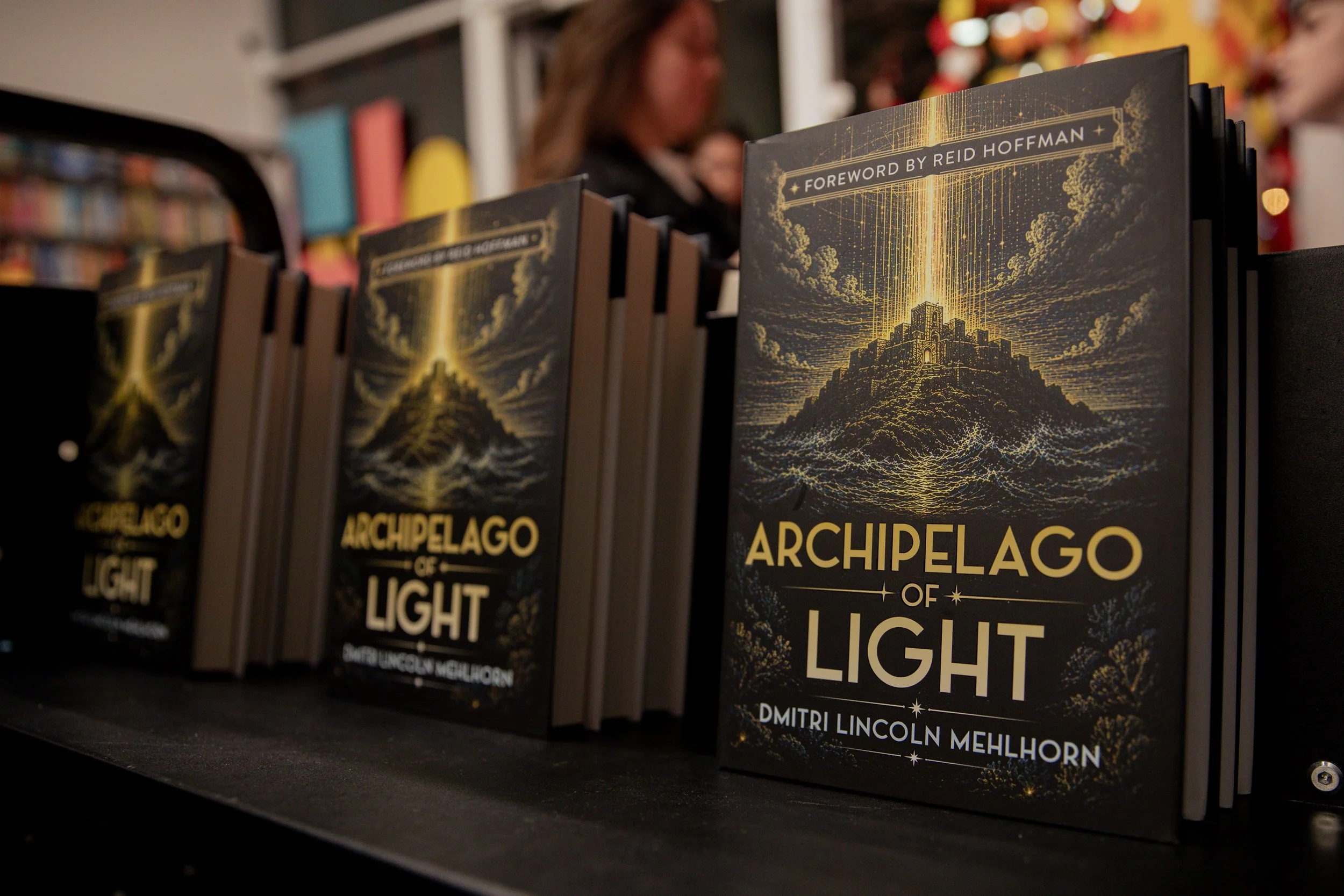
The Colophon, Reimagined
A 500-year-old tradition in publishing is now the first AI Ingredient Label for books
SHEARLINE PRESS
Author Attestation
This attestation accompanies your publishing agreement with Shearline Press and is incorporated into it by reference. It records how artificial intelligence was used, or not used, in the making of the Work named below. Our policy permits the use of AI for research, brainstorming, and line-level editing of the author’s own prose. It does not permit the publication of books whose prose — at the level of sentence, scene, or chapter — has been generated by an AI system, whether or not that output was subsequently revised.
Please describe your use honestly and in plain language. This is not a test, and the range of legitimate use is broad. A material misrepresentation is a breach of your publishing agreement.
1. The Work and the Author
Author (legal name)
Pen name, if different
Title of the Work
Manuscript date / version
2. Your Account of AI Use
In your own words, describe how AI tools were used in the making of this Work. Identify the tools by name, the stages at which you used them (research, planning, drafting, editing, other), and the purposes they served. If you used AI over a long period or across multiple systems, a summary is sufficient; you need not reconstruct every exchange.
If you did not use AI at any stage, write “None” on the first line and proceed to Section 3.
The sample below is illustrative only. Replace it with your own account, which may be shorter or longer and should reflect your own process, not this structure.
Sample account
I, [Author Name], used generative AI [extensively / occasionally / in limited ways] in the making of this Work, beginning in [month, year].
Origins. The core [argument / outline / story] came from my own work: [describe briefly, e.g., notes, charts, and outlines developed by hand between (date) and (date)].
Tools and stages. I used [tool names, e.g., Claude, Gemini, ChatGPT] during [stages, e.g., early research, outlining, and drafting]. They helped me [purposes, e.g., brainstorm ideas for vignettes, test the structure of an argument, suggest character names, locate sources I then verified].
How it compared with human help. [Optional.] The work felt similar to [comparison, e.g., what a research assistant does for a professor, or the feedback I get from a trusted reader or hired editor]. The main differences were [e.g., speed and availability on one side; errors and inconsistency on the other].
Editing. Beginning around [date], I used AI alongside [human collaborators, e.g., two paid editors, research assistants, a circle of readers] for editing at the [developmental / structural / line] level. [Describe the method, e.g., working section by section through iterative prompts, since the tools could not usefully assess the full manuscript at once.]
What ended up in the manuscript. [State plainly how AI-generated material relates to the final text, e.g., “Some ideas and passages first appeared in draft form in AI exchanges alongside my prompts. None of that text was placed directly into the manuscript; I used it, together with input from human readers, to develop the final text myself.”]
3. Affirmations
By signing below, you affirm the following:
Prose authorship. The prose of the Work — its sentences, paragraphs, scenes, and chapters — was written by me. Where AI tools suggested phrasings or line-level edits to text I had already drafted, I weighed those suggestions and adopted, adapted, or rejected them as my own editorial choices.
No generated passages. I did not incorporate AI-generated sentences, scenes, or chapters into the Work.
Completeness of disclosure. The account given in Section 2 is a truthful and reasonably complete summary of my AI use in making the Work. I have not omitted any category of use that a reader or the Press would reasonably want to know about.
Rights and third parties. To the best of my knowledge, the Work does not infringe the copyright or other rights of any third party, including through any AI tool’s reproduction of protected material.
Cooperation. If the Press has questions about my AI use during editorial review, I will respond in good faith and, on reasonable request, will share drafts, notes, or representative exchanges with the tools I named above. At any point, I will share all available drafts and notes and exchanges with Shearline.
Ongoing obligation. If I make material use of AI during post-submission revisions, I will update this attestation before the Work goes to press.
4. Published Disclosure
A short disclosure statement will appear at the front of the published book and in its catalog metadata, describing in plain language the AI tools used and the purposes to which they were put. The Press will draft this statement in consultation with you, drawing on your account in Section 2, and will share it for your review before publication.
5. Signature
I have read the Shearline Press policy on authorship and AI, and I make the affirmations above knowingly.
Signature
Date
Printed name
Witness / Editor